Friday, April 5, 2013

Walking Through Heritage (1)

Singapore may not have a single "world heritage site" listed by United Nations Educational, Scientific and Cultural Organization (UNESCO) but it has unique history and culture that are worth discovering.

The government through its National Heritage Board (NHB) is actively promoting the identity building, vibrant culture and historic sites of the country. The NHB presents "heritage programmes and curates exhibitions to connect the past, present and future generations of Singaporeans through a shared experience." Singapore has myriads of museums, heritage interpretative centres, institutions and precincts that both locals and tourists can visit to learn and understand further the Singapore story.

This April, I have started walking through heritage to rediscover the “uniquely Singapore” and revisit the past of my second home.
 
SG River & Civic District Trails
 
Raffles Hotel Singapore - opened in 1887 offering rooms
in an old bungalow-style building overlooking the beach
 and the South China Sea.

The old Kalachuchi stands beside the hotel property.

Arcade shops & restaurants within Raffles Hotel.
War Memorial Park leading to Esplanade and Riverside.

Exquisite Chandeliers

Singapore River Cruise
 
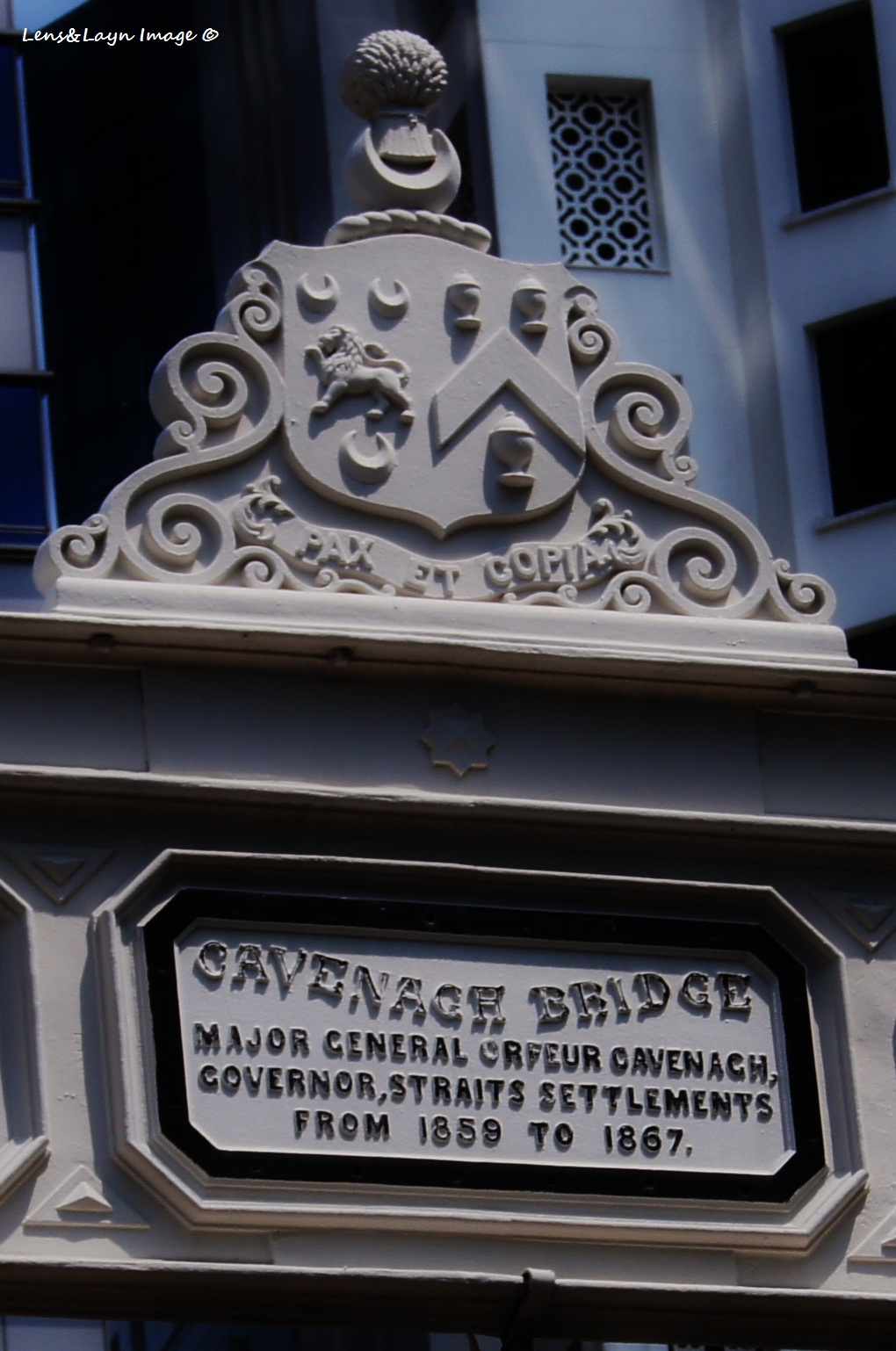
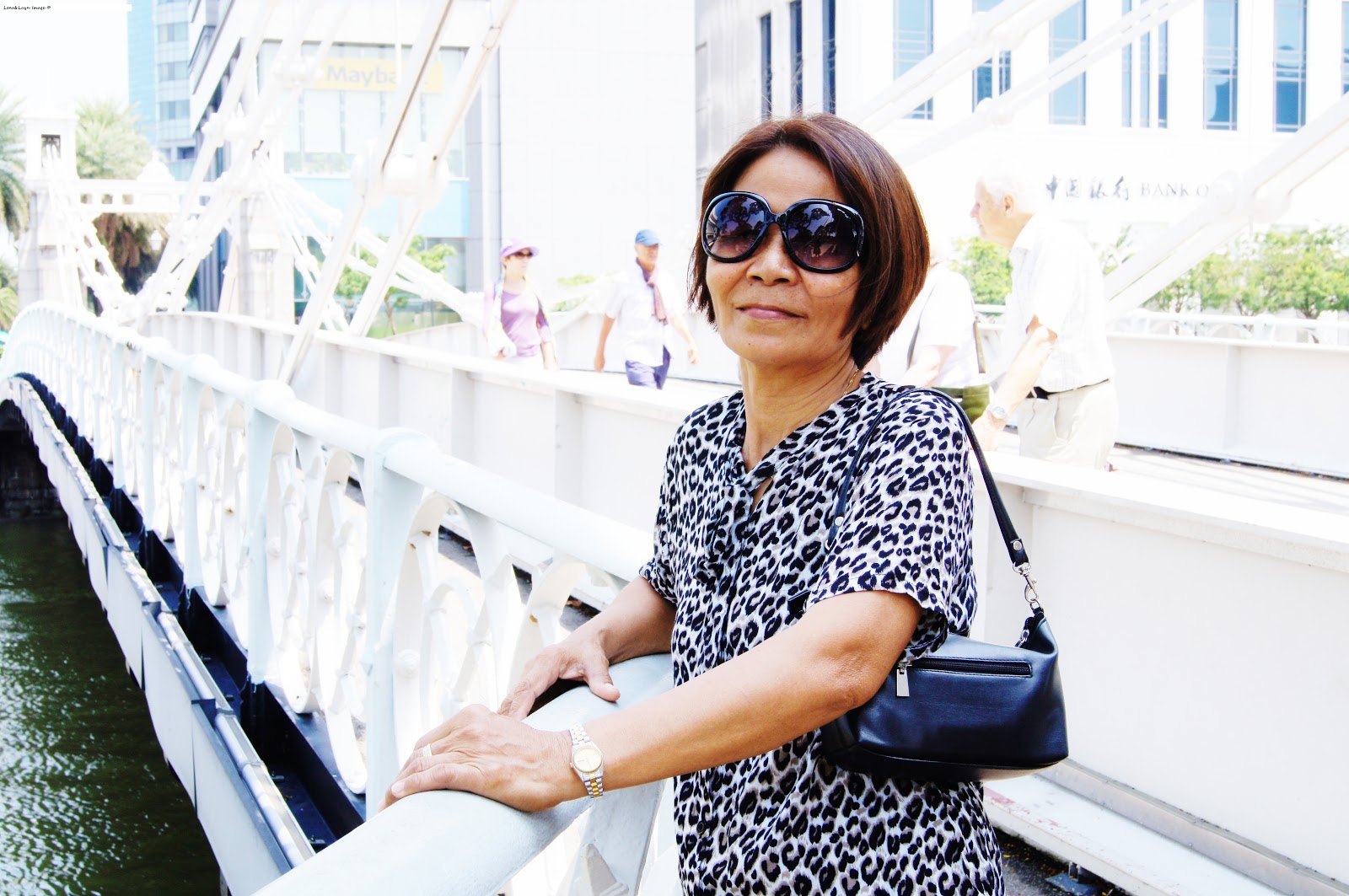
Cavenagh Bridge, the oldest bridge standing on the river in its original form,
named after the last Indiaappointed Governor of Singapore,
Colonel (later Major General) William Orfeur Cavenagh.

The Fullerton Singapore (Former Fullerton Building)
stands on the former site of Fort Fullerton,
a garrison constructed in 1829 to defend the town against attacks.
The building was painstakingly restored and converted into a luxurious hotel.
 
Empress Place or Asian Civilisation Museum - traces
the history of the Singapore River since the 14th century
 through artefacts, archival photos, video and sound clips.

Raffles’ Landing Site. This statue marks the spot where
Sir Stamford Raffles (1781–1826) is believed to have first landed on 29 January 1819.

Shophouses along the side of the river. These are usually two to four-storey
terraced buildings that incorporate a business premise on the
ground floor and living quarters on the upper levels.

Clarke Quay was a fresh water distribution point in the first half of the 19th century.
Named after Sir Andrew Clarke, the Governor of the Straits Settlements from 1873 to 1875.
Eldin Bridge - an iron bridge was constructed in 1862
and named after the Governor-General of India, Lord Elgin.
The Parliament House.


Resting our tired but happy feet.
Next Heritage Trails - Fort Canning, Kampong Glam, Jalan Besar and the list goes on and on... And I hope to finish my list before the year ends.
 

Sunday, March 31, 2013

Memories of Halcyon Days

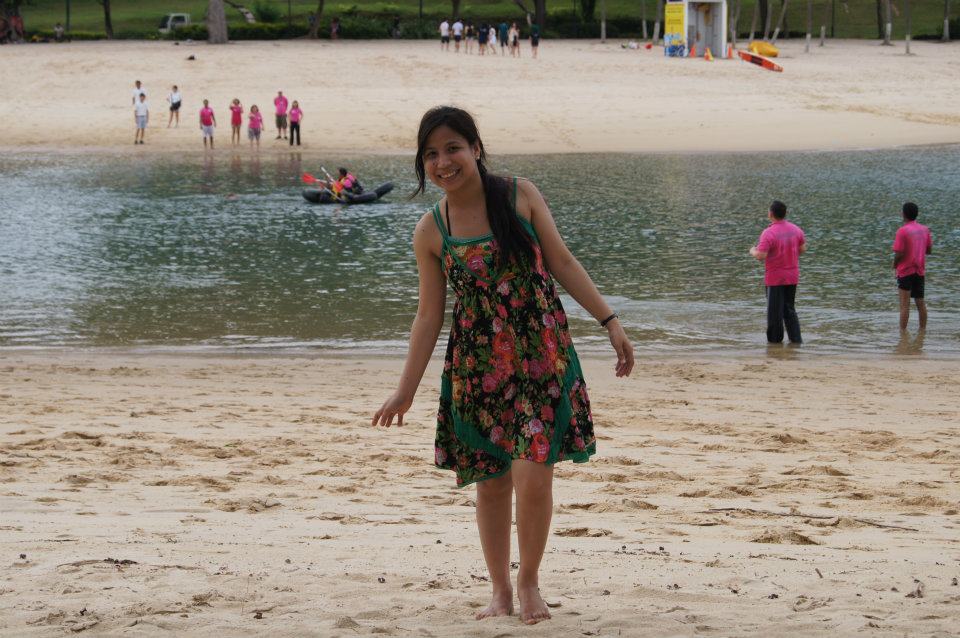
When summer comes we tend to go to the beach,
but for people who don't like the heat and the sand,
they'd prefer to visit typical swimming pool
or just hang out at any refreshing area like eco park.
Memories of halcyon days from the past several years...


Another beach adventure begins this April...
 

Sunday, March 3, 2013

Rising Sun in Batam


Rising Sun in Batam, view from my hotel room
 
If you are living in Singapore for quite some time, you will probably get bored after visiting all the malls or you will probably get tired after working for long hours. You will probably reach to a point where you will like to go somewhere different… either to a fancier place or even to a lousier one. So one gloomy Saturday, we boarded on the ferry to escape from the hustle and bustle of the city. In spite of the fatigue from the long work week in the office, I was a little jumpy while we were sailing the Singapore coast.  It always excites me to go on an adventure in a place I’m visiting for the first time.  And it was my first trip to Indonesia! We were heading to Batam which is located less than 20km from Singapore. It took us an hour before we finally reached our destination. After we pass through Immigration clearance, we hurried to collect our luggage and hopped on the tour bus.

We opted for the package tour since we didn’t have enough time for the free and easy one. Most of our companions were Chinese Singaporean; luckily, our tour guide, who is an Indonesian with Chinese descent, spoke both in English and Mandarin fluently.  Our city tour was rather too rushed. I felt like we were just given a time to take a glance and not really experience the town.  We first visited the Thua Pek Khong Temple which is said to be the oldest historical temple in Batam. I didn’t even have the chance to get in and we only managed to take a snapshot outside the temple. Then we passed by the Nagoya China Town and headed to the very popular Polo Shop. According to our tour guide, the shop sells authentic Polo by Ralph Lauren at a cheaper price. I wasn’t a fan so I didn’t buy one; rather we went to see the sidewalk shops where we met one Filipino vendor (kababayan from Mindanao) who sells woodcarvings and other home decors.


It was almost twelve noon when we finished the shopping tour. And I was beginning to feel uncomfortable and was a little starving too, but we had one more stop before lunch. A few minutes later, we finally arrived at The Batam Folk Culture Villages Miniature (Taman Mini Indonesia). It’s an open space park where you can find dozens of miniatures of local houses in Indonesia. There are several trees in the park but they aren’t fully grown yet. Thus, going around the miniature houses during the day when the sun is up wasn’t really enjoying. It was very hot and extremely humid. But in fairness, the houses were cute and lovely.

We had our seafood lunch at the seaside restaurant called Golden Prawn. Being a fan of seafood, I found the food very nice and delicious. The fish, prawns, clams, crabs, squids... what else… It was the best part of our tour. My tummy was extremely happy.
We were dropped off at our respective hotels after the sumptuous lunch. We relaxed at our room while waiting for our scheduled aromatherapy full body massage at a nearby spa. The hotel we stayed in was rated 4-star in Batam but if compared to Singapore standard, I’d think it’s below 3-star. Smoking in the reception area and even on the second floor lobby, is allowed. The hotel has only two restaurants and one bar. The breakfast menu was quite ok, mostly local food. There’s a small yet clean swimming pool and a gym too.

Batam is seemingly ordinary place to visit. It’s like a typical town in the Philippines where anyone can cross anywhere on the street or jaywalk. It’s a place where people don’t mind tossing trash left and right. But if you’re just tired of waking up day in and day out in a very stressful and workaholic type of environment and you just want to have a quick break then taking a short trip to this idyllic place is a good option.

What I love most about my Batam experience was its rising sun. The hotel room I stayed in has an unblocked view of the sea. And waking up in the morning with stunning panoramic sunrise view was priceless. It was a beautiful thing. It reminded me that every day is a new gift.  It’s a new chance to experience and appreciate both the good and the not so good in life, no matter what we’re going through, no matter where we are and no matter who are we with. The rising sun in Batam is just a simple reassurance of God’s abundant love to everyone.


Wednesday, February 20, 2013

What Is It In Iskandar Puteri (JB)?


The skyline of Johor Bahru, seen from Woodlands Waterfront
 
Most of my visits to Johor Bahru are not a matter of want, but rather a matter of need (napilitan lang, kailangan eh J).
Bangunan Sultan Ibrahim with a beautiful model
 My first visit was when we went to Kuala Lumpur where we took a bus from Larkin Terminal which is situated within Johor Bahru Sentral. Other succeeding trips were mainly to tour around families and friends visiting Singapore for the first time. Johor Bahru, commonly called as JB, is Malaysia's southernmost city, just across the border from Singapore. Currently, I live in a suburban town in northern Singapore; thus, going to JB is as easy as going to the downtown. I can even see the buildings in JB from our flat!

Getting across to Johor Bahru from Singapore is quite cheap. Bus fare to and fro will only cost about S$4.00 (roughly about Php130.00). If crossing the border by foot is allowed, then it will only cost a few calories to get there. Unfortunately, walking is prohibited. One must travel by bus or a car.
Based on experience, it was very stressful travelling during rush hour on weekdays (morning 7am-8am/6pm-8pm) and almost all day during weekends and public holidays; as there were too many people pushing and shoving, not to mention the long queue for the bus and to get through immigration. It would be more orderly and quite to travel during weekdays.
The city doesn’t have that “wow” factor that you could get from other places in Malaysia. Though JB does have tourist attractions like Legoland, Hello Kity Town, Pulai Waterfalls, Sultan Abu Bakar Mosque, Danga Bay, Johor Zoo and among others, these are not within the JB Sentral. During our past visits, we only had day trips. So we only walked through the city center which seems a little run-down, scary, smelly and a bit messy. It is really not a tourist-friendly place. Travelling alone for a foreigner is a “no” “no” unless you’ll just stay inside the mall. Speaking of malls, there are myriads of shopping complexes in the city. Some offers quite competitive price compared to shops in Singapore. However, if it is compared to other cities in Malaysia, it’s a different story. I think shopping for souvenirs and other local brands in JB is much more expensive compared to Malacca or Kuala Lumpur.
Nonetheless, we managed to enjoy our little adventure by visiting some of the popular landmarks in the city. First stop, we went to Bangunan Sultan Ibrahim. It wasn’t allowed to go inside the gate, but we sneaked in while the security guard was sleeping. We get caught in the end and we were shooed away. After a few walks here and there, we reached the seemingly bizarre Bazaar St and paused for a while at the Red House in China Town. As we went on, we found ourselves in Little India. We climbed to the Hindu Temple and we walked around barefoot just like the others. Did we pray? Hmmm, we took a photo that’s all. J
After the long walks and laughs, there was nothing more to do than to fill the growling stomach. So we ended our day at the City Square Mall where we enjoyed a fresh juice and seafood delights. What’s really in JB? Nothing much, it’s just a perfect short escape from Singapore. Whether you just want it, or need it.
Family poses in front of the KTM station
Sumakay sa bas. Tumawid tulay. Sumakay naman ng teksi. Bumaba sa bangunan. Nakipagpatentero sa tawiran. Naglakad sa d mataong bazaar st. Nasilip ang bahay-tsino. Lumiko sa gawing little india. Pumanhik sa templo ng hindu. Nakarating sa City Square. Kumain, nagpalamig at nag-window shopping. Umakyat sa escalator. Sumakay ulit ng bas. Tumawid sa tulay at nakabalik sa bahay. Ganun lang kabilis ang maglakbay. J


Tuesday, February 19, 2013

A Simple Dream of Revisiting History

Façade of Fort Santiago
As a normal student who attended history classes during my elementary and high school days, Intramuros has always been part of the lessons. I've heard and read about it countless times. Back then, I sometimes wonder when I can visit this popular historic place. Since I was born and bred in the province, it was like a dream going to Manila during those days. As such, going to Intramuros was also just a dream. When I moved to Manila after schooling, I was busy making a living and so I have forgotten about this simple dream.

I only visited the heritage site few weeks before I left the Philippines in 2010. It was a dream came true (isang mababaw na pangarap)! I travelled with someone who is quite familiar with the place. I forgot how we arrived at the site, but one thing is for sure, we took a jeepney and not the calesa.
As first timer visitor, I was fascinated as I walked through its uniquely structured streets; obviously it has a touch of the Hispanic Culture. The Walled City, more commonly known as Intramuros of Manila or Ciudad Morada, is situated at the mount of the Pasig River. For few centuries, Intramuros was the Spanish quarter, seat of colonial government and home for vast number of Spanish colonist.

We started our walk-through at Fort Santiago or Fuerza de Santiago. This is the oldest Spanish fortress in the country and one of the major attractions inside Intramuros. Some of the must-see attractions at Fort Santiago include World War II artillery and underground tunnels used by the Japanese, the former Spanish dungeon of the main square or Plaza de Armas, and Rizal Shrine - former prison of National Hero Jose Rizal.
The San Agustin Church
We've also visited the San Agustin Church which is a designated UNESCO World Heritage. There's also a museum beside the Church but we didn't bother going in. Instead, we went to souvenir shops which showcasing Filipino crafts. I didn’t buy any because I took a lot of pictures as souvenir, but my companion did. (Later on, she found out that they gave her defective products.)
We went further into the streets to see what else that needs to be seen, only to be dismayed by litters, unpleasant smell, pollution and the slummy area in some portion of the historic site. Nevertheless, I’ve read in the newspaper, quite some time ago, that the historic site is up for rehabilitation through public-private partnership programmes by the Aquino government. Let’s just hope that they can come up with a comprehensive solution in dealing with the urban poor now squatting inside Intramuros.

Back then, I was dreaming of just revisiting the history; but now, I'm hoping for a litter-free, crime-free and shanty-free Walled City. It may be just a dream for now, but I look forward to the day that it will come true. Perhaps on my next visit to this place, I'll keep my fingers crossed.

Inside Fort Santiago
Calesa or Spanish-era horse-drawn carriage

Trompe l'oeil ceiling
Hispanic style front door


Flashback: Day & Night in Shah Alam


Salahuddin Abdul Aziz Shah Mosque
It was another day of work away from office, this time in Shah Alam. When I heard of the meeting venue from the client, I turned to my iPhone and googled the place. Alas, it is where the Sultan Salahuddin Abdul Aziz Shah Mosque is, also known as the Blue Mosque. Shah Alam is the state capital of Selangor, Malaysia which is located about 25 kilometers west of Kuala Lumpur. It replaced Kuala Lumpur as the capital city of the state of Selangor in 1978 due to Kuala Lumpur's incorporation into a Federal Territory.
 
 Excited about the trip, I dragged a 'pinsan' ("hoax" cousin) to come along. We took the Air Asia flight from Singapore to Kuala Lumpur then a cab going to Selangor. It took us about 45 minutes to reach Shah Alam from the LCCT Airport. Compared to other cities in Malaysia, Shah Alam is rather a quite place. There are fewer malls, less traffic jam and I haven’t seen any single bar around. You seldom see people walking down the street at night unlike Kuala Lumpur that seems very busy even in the wee hours. In fact, Kuala Lumpur never sleeps.

Majlis Bandaraya Shah Alam

When we arrived at the Grand BlueWave Hotel, we specifically requested for a room with the Blue Mosque view. Without a doubt, the room has a magnificent view of the blue dome. It is indeed one of the most stunning structures in Malaysia. But we didn't know the real price of getting the grand view until the night and early morning came. We were awakened several times due to the loud sounds of early Morning Prayer of the Muslims. "Allahu Akbar...allahu Akbar" and the sounds went on and on.


It was still a good experience, a different one. It felt like I was in the middle of "middle east" or somewhere else. At least I had a big breakfast and delicious pizza for lunch at the Semarak Café. After a short yet tiring event in Shah Alam, we headed to Kuala Lumpur for another workshop.


View from my hotel room