Thursday, July 25, 2013

Getting Inspiration from the "Innocent World"

I haven't been writing or painting for quite some time now. It's been almost two months since my last blog. I've been quite busy in the past few days. Or maybe am I just pretending to be busy in my life? Well, honestly, I wasn't that busy... I guess I just don't have enough inspiration to write or paint something lately.
 
That's why I abandoned my comfort crib for a while and journeyed to the city to be inspired by “Innocent World”. It is a solo exhibition by a Japanese Painter Tomoyuki Kambe. The exhibition features various aspects of traditional Japanese painting styles that depicts the artist’s observation “that the big world is made of many tiny elements and living things around us”. The artist combines traditional art medium with modern technique to create art pieces that illuminate on the philosophy of seeing a world in a grain of sand. This is really evident on his latest and exquisite paintings displayed at Japan Creative Centre during the exhibition.
Some of the artworks at the exhibition
 
Impressive representation of nature...
the pebbles, small animals, and tiny plants...
Very detailed work of art

"Reaching Out"


In this big big world, it's the small thing that makes it more interesting. Now, I'm inspired.

Monday, May 27, 2013

Putting Some Orange in Life, Literally & Figuratively


"Happiness doesn't depend on any external conditions,
it is governed by our mental attitude." -- Dale Carnegie
In today's fast-paced living environment, every one of us is facing myriads of tough life's challenges such as demands from works, families, peers or friends. As a person with multiple roles in life, we are expected to do more than what seems we can do. We are required to fulfill duties and responsibilities beyond our available resources and even beyond our preferences.


More often than not, these demands create more pressures to our already stressful life. We either embrace or shun away from these demands. When we try to clinch too hard on these, we could end up sabotaging our own health and sometimes, even our relationships with other people. And when we try to avoid these additional stresses, we’re running away from changes, possibilities and opportunities that can help us grow further. If too often, we continue to resist change and always do the same thing over and over again, we will get bored, we will languish. It’s fine to welcome additional responsibilities and demands in life, as long as we can keep up in caring ourselves and others. It’s also ok to do things over and over again, especially if the method is a proven success, but we must welcome change and improvement. It is important to spice things up in our lives once in awhile to discover new things and find new successes. As some say, we need to put some orange in our lives. If I say “orange”, I mean, literally and figuratively.

"When life gives you lemons, make orange juice
and leave everyone wondering." - Anonymous
In color psychology, orange is the color of adventure, cheerfulness and inquisitiveness. It has a “freeing action upon the body and mind, relieving repressions”. So whenever life feels dragging, it’s time to get some orange to refresh, reenergize and relax.
Below are some of the “oranges” that can improve our lives in some way or another: 

Orange for Relationships
Happiness – not necessary smiling at all times or getting what we want, but rather its being contented with what we have and living with a thought and meaning
Kindness - practice random acts of compassion at any time, in anywhere to anyone.
Encouragement – praise others even for a small success and inspire to do better

Orange for Work
To order g3, please leave a message.
Creativity & Energy – inject new ideas to what we do; put some humor at work; play and celebrate good times
Optimism – never lose hope and keep positive.
Motivation – learn the “whys” of what we do to keep us going.

Orange for Health
Orange/Citrus – take powerful natural antioxidant which helps the body develop resistance against harmful body agents.
G3Juice – take Superfruit blend that contains so much good stuff to increase energy and enhance longevity; promotes health in muscles and joints protecting and strengthening vital tissues.
Last but not the least; try to wear orange from time to time. Based on color psychology, wearing orange can help to balance your emotions. Especially if you are in distress, it can lift up your spirit. If you are not a fan of bright or colorful dress, just try once and have some fun.
Power Up Day


Monday, May 13, 2013

The Relics of St. Paul's Church

St. Paul’s Church is one of the oldest Christian churches in Malacca. It was originally built in 1521 by a Portuguese captain, Duarte Coelho; however, it was transformed later into a burial place for the noble by the Dutch then as a powder magazine during the British occupation. The church is located majestically at Bukit St. Paul. It’s now part of the Malacca Museum Complex comprising the A Famosa ruins, the Stadthuys and other historical buildings.

It’s just a few minutes climb from the stairs right after the façade of Fort A Famosa. Although the church has lost its splendid ornament, it is still worth climbing the stairs to enjoy the bird’s eye view of the city and Straits of Malacca. It’s also a little bit breezy at the top of the hill as the church is surrounded with big old trees; however there are some vendors and hawkers selling souvenirs, toys, bottled water and among others which seemed to be a little distraction to the overall ambience of this historic place.

Inside the ruins, there are large granite tombstone belongs to some of the Dutch noblemen buried at this hill. There’s also one big hole in the Church barricade with steel bars which is the open grave that once contained the body of St. Francis Xavier before he was shipped to Goa, India, in 1553.  In front of the Church stands a marble statue of St Francis Xavier, known as the Apostle of the East because of his extensive missionary works in Asia.

Through times, the church was used for different purposes from place of worship to burial to power magazine. Today, it’s just a mere historical spot in Malacca where tourists, by standers and hawkers flock.

I may not be a Catholic believer, but it’s good to know that there are still some people visiting this place to celebrate the Feast of St. Francis Xavier. And I hope that this church will continue to stand as a reminder of the teachings of the Christian faith.


Wednesday, May 1, 2013

Finding the Lost Venice of the East (1)

We’ve been doing a “heritage walk through” since early April and over the weekend we went a little further from Singapore.  This time around, we explored the historical Malacca or Melaka. The city which is one of the smallest states of Malaysia is just about 2-3 hours non-stop driving from Singapore. Since we travelled by luxury coach which is impossible not to stop along the way, our journey took about 4 hours.

While on the road, we’ve learned the history of Malacca in a nutshell. "Melaka, popularly believed to have been named from the Melaka tree was founded in 1396. Before the 15th Century, Melaka was just an ordinary fishing village", the tour guide shared. The city is located on both sides of the Malacca River near its mouth into the Strait of Malacca. Its river played a vital role in the history. The guide also said that Melaka was “once dubbed the Venice of the East, where the traders of East and West met, its river was the beginning point of the "Sultanate of Melaka" empire, attracting traders from all corners of the world.” But as time went by, due to some reasons (nature, conflicts, rapid development or any others), the city lost its fame.
Hotel Equatorial Melaka
 
Today, Melaka regained its glory, not as a world's major trading port but as a tourist destination. Myriads of tourist from across the globe visit this city every year. The city is without a doubt rich in history, culture, heritage and tradition that it made to the list of UNESCO World Heritage Site. As we approached to our hotel, we had a glimpse of the “old” and “new” Malacca. We saw both modern high-rise buildings and traditional style houses converted to commercial establishments. We checked in at Hotel Equatorial Melaka which is located in the heart of the city. We had a good experience at the hotel, checking in was very fast and requests were promptly attended. It was not my first time at the hotel; I’ve stayed there last year for a business trip. But during our weekend stay, I fully enjoyed the hotel amenities. The property is rather old compared to others hotels around the area. Nonetheless, it is nice and clean. Beds smell good and very comfy. It has nice selection of dining and cool outdoor swimming pool. The lobby is quite spacious as well. It’s just a short distance from the major places of interest in Melaka such as St Paul, Jonker St, Christ Church, Fort a Famosa and the river. Shopping malls are also close to the hotel. Having housed in a strategic hotel like this, we had many choices to do – shopping, sightseeing, swimming, dining or seeing a movie.

After our lunch at Papa John's Pizza, we refreshed a bit and decided to explore the “old” Melaka in a laid back manner – walking. Another option to experience the heritage trail in Melaka is by “trishaw” also known as rickshaw or pedicab. It is a tri-wheeled cycle decorated with colorful which can be hired in an hourly basis. In Melaka, trishaw owners even attached stereos on their cabs and play loud music while on the road.
Trishaw for hire
While we were heading towards our first stop, we got curious about an on-going event in an open field near the mall. There was a little crowd cheering, shouting and running. We decided to drop by and see what was going on. We learned after that it was the final day of the Malaysian National Paintball League 2013 which was held at Dataran Pahlawan Melaka Megamall.
 
We continued our walking adventure and in just a few minute, we’ve reached the façade of the Fort A Famosa. The structure is quite similar to that of Fort Santiago in Intramuros, Manila. According to written accounts, “the hallmark was built by the Portuguese in 1511 as a fortress and sustained severe structural damage during the Dutch invasion in the early 17th century. The British East India Company had then set to destroy the said fort but timely intervention by Sir Stamford Raffles in 1808 saved what remains of Porta De Santiago or commonly known A Famosa Fort.”
 
Ruins of Fort A Famosa


To be continued... Our next stops include St Paul, Jonker St, Christ Church and the Melaka River...
 

Wednesday, April 24, 2013

Walking Through Heritage (2)

After the River Walk early this month, we continued our little "walking through heritage" adventure in one of the most historic landmarks in Singapore – Fort Canning. The park is located on a hill in the downtown area. Some parts of the park are being upgraded during our visit as such we were not able to witness other highlights of the property. Nonetheless, we enjoyed the lush greenery and tranquility of the place.

Sights at the Site


Next stop - Heritage Sites in Malaysia

Saturday, April 13, 2013

Pink Within the Green


Lonely shade, Happy shrub.

It was Friday, the sun shines so brightly and it would be such a waste to stay at home all day. Embarking on a peaceful walk to get up close with nature and greenery and reading a book on a bench under the tree, will be a perfect way to spend the afternoon. And so we did.
 

Read and relax.

We packed few sandwiches, sausages, fruits and drinks and brought along some books too. We hopped on a bus and alighted at a nearby nature park. The scorching sun of April was unbearable but as we walked through the lush forest tracks we spotted interesting plants and birds that made us seemingly forget about the torrid weather. We’ve seen different kinds of ferns and large native trees. Fruit bearing trees such as Langka, Rambutan and Pakak are  also evident in the mini forest.


Natural shelter, refreshing shade.


Dragonflies watching at the verge of the pond.

Before we continued our nature trail, we paused for a while at the Shelter and had a bite of the goodies we brought. Unlike other recreational areas we’ve visited, there were neither vendo machines nor drinking stations in this nature park. Luckily, we brought more than enough throughout the afternoon.

After recharging our empty stomach, we went down to the pond plaza and found an idyllic spot under the big tree to read books. It’s a quiet and relaxing paradise; a little haven in this busy city country. We went closely at the verge of the pond to check if we would find some fish, unfortunately, we didn’t see any. Instead, we witnessed dragonflies and butterfiles in the surroundings. Squirrels and monitor lizards are common in the area as well. There are few signs of “Don’t Feed the Monkeys” in the park, but no signs nor trails of monkey during our trip.

Tall and Beautiful.

At the bank of the quarry pool.


Near the pond plaza is a stairway leading up to two scenic lookout points. Since we’re still full of energy, we climbed to have a bird’s eye view of the pond. Atop, there’s another shelter where we sat for a while and ate some fruits. After eating and observing birds at the same, we packed our things.


Wild and rich flower kissed by the sun.


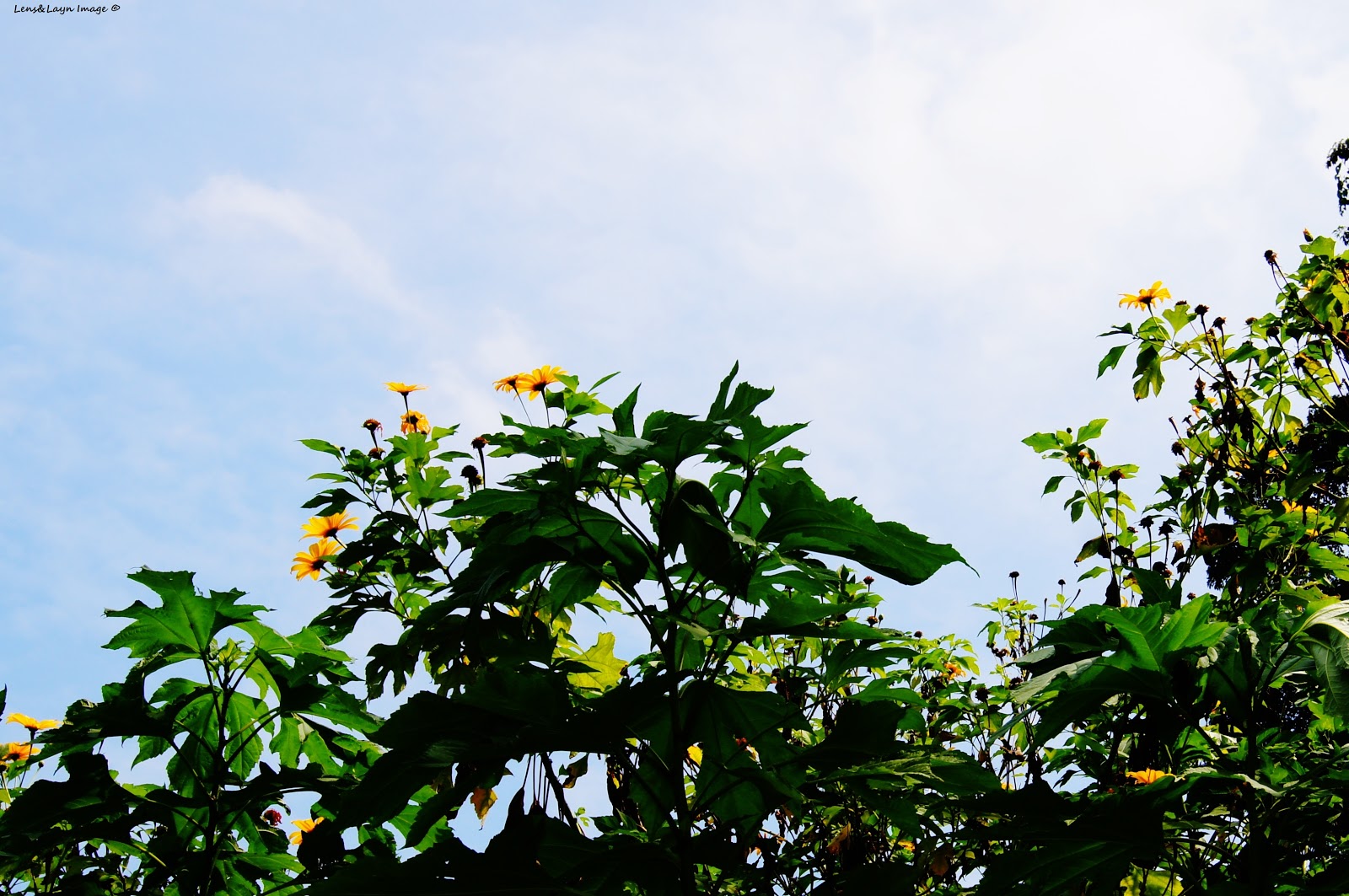
Wild sunflower along the way reminded me of my other home - Baguio City.

It was time to leave the park, but instead of taking the easy path going to the bus stop, we turned the wrong way which led us to a long steep path going to the War Memorial Park entrance. We searched for the nearest exit leading to the main road and as we walked down the road, familiar things greeted us. These many wild sunflowers swaying in the wind seemed to be waving at us. Saying hello or saying goodbye, it doesn’t matter. All I know is, these rich yellow living things reminded me of my former haven, my Baguio, my other home. I know it was really time to go home. J
~~~Pink and Green


Friday, April 5, 2013

Walking Through Heritage (1)

Singapore may not have a single "world heritage site" listed by United Nations Educational, Scientific and Cultural Organization (UNESCO) but it has unique history and culture that are worth discovering.

The government through its National Heritage Board (NHB) is actively promoting the identity building, vibrant culture and historic sites of the country. The NHB presents "heritage programmes and curates exhibitions to connect the past, present and future generations of Singaporeans through a shared experience." Singapore has myriads of museums, heritage interpretative centres, institutions and precincts that both locals and tourists can visit to learn and understand further the Singapore story.

This April, I have started walking through heritage to rediscover the “uniquely Singapore” and revisit the past of my second home.
 
SG River & Civic District Trails
 
Raffles Hotel Singapore - opened in 1887 offering rooms
in an old bungalow-style building overlooking the beach
 and the South China Sea.

The old Kalachuchi stands beside the hotel property.

Arcade shops & restaurants within Raffles Hotel.
War Memorial Park leading to Esplanade and Riverside.

Exquisite Chandeliers

Singapore River Cruise
 
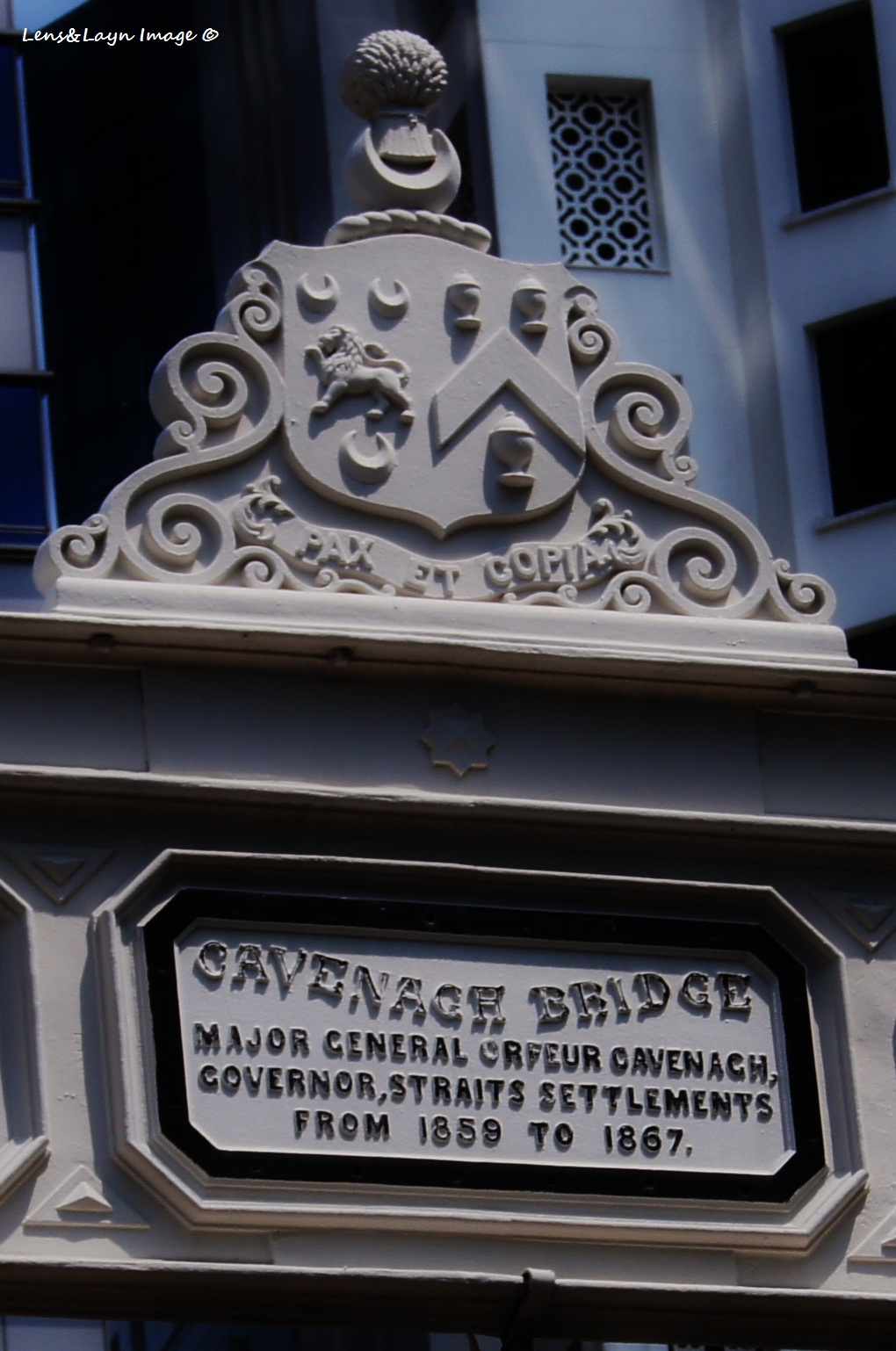
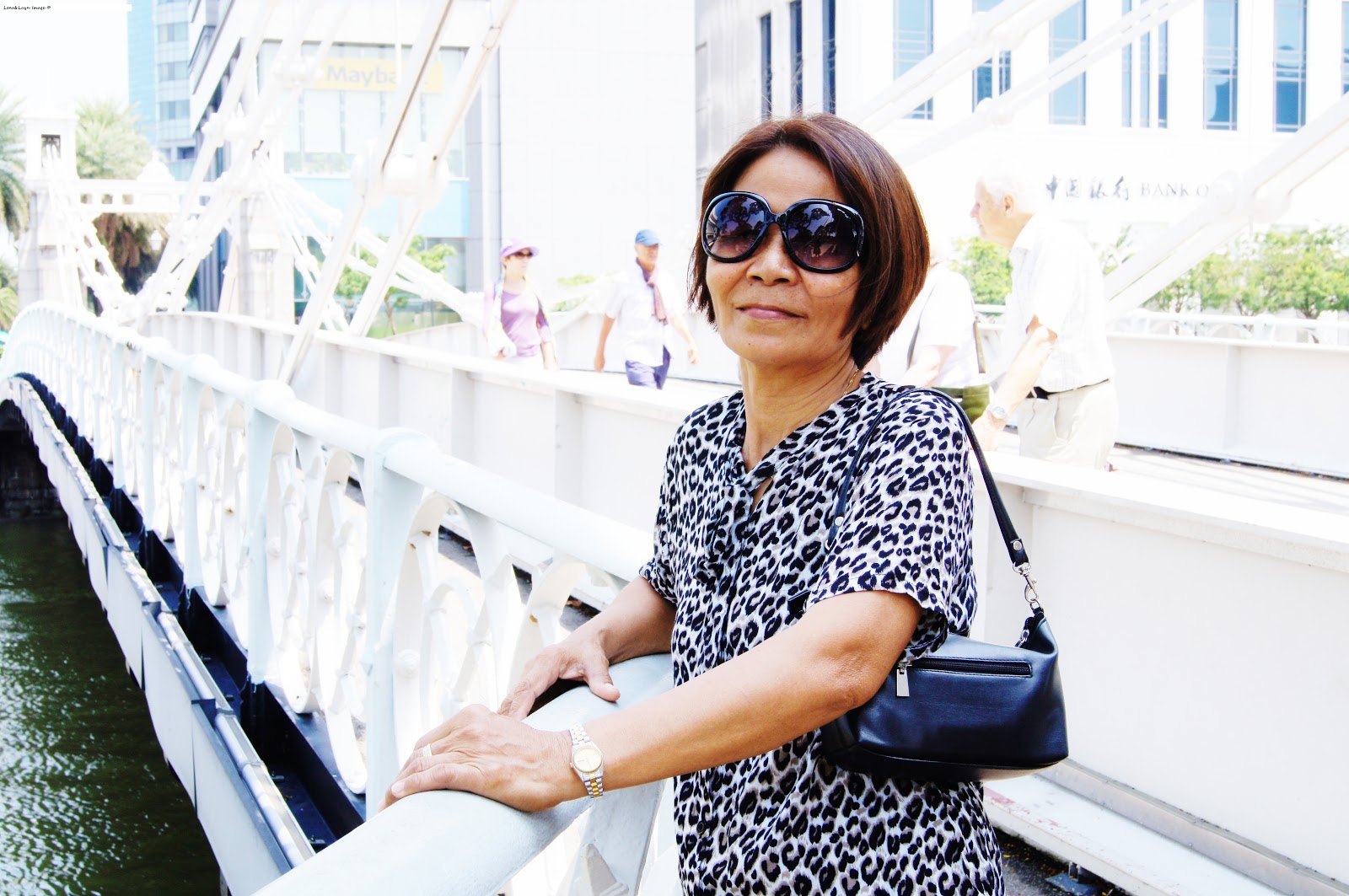
Cavenagh Bridge, the oldest bridge standing on the river in its original form,
named after the last Indiaappointed Governor of Singapore,
Colonel (later Major General) William Orfeur Cavenagh.

The Fullerton Singapore (Former Fullerton Building)
stands on the former site of Fort Fullerton,
a garrison constructed in 1829 to defend the town against attacks.
The building was painstakingly restored and converted into a luxurious hotel.
 
Empress Place or Asian Civilisation Museum - traces
the history of the Singapore River since the 14th century
 through artefacts, archival photos, video and sound clips.

Raffles’ Landing Site. This statue marks the spot where
Sir Stamford Raffles (1781–1826) is believed to have first landed on 29 January 1819.

Shophouses along the side of the river. These are usually two to four-storey
terraced buildings that incorporate a business premise on the
ground floor and living quarters on the upper levels.

Clarke Quay was a fresh water distribution point in the first half of the 19th century.
Named after Sir Andrew Clarke, the Governor of the Straits Settlements from 1873 to 1875.
Eldin Bridge - an iron bridge was constructed in 1862
and named after the Governor-General of India, Lord Elgin.
The Parliament House.


Resting our tired but happy feet.
Next Heritage Trails - Fort Canning, Kampong Glam, Jalan Besar and the list goes on and on... And I hope to finish my list before the year ends.